





Sign up for a free account now.
Cutter Compatibility
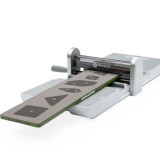
This die is compatible with these cutters:
Description
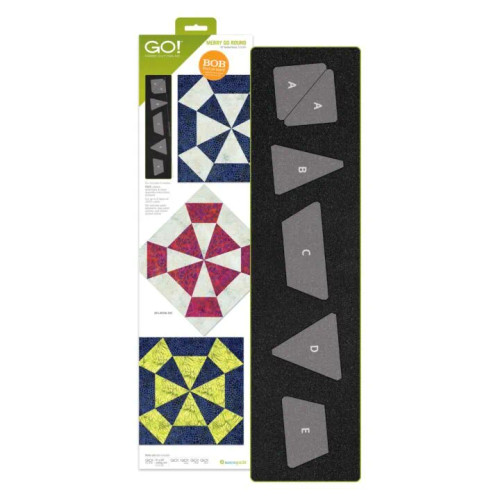
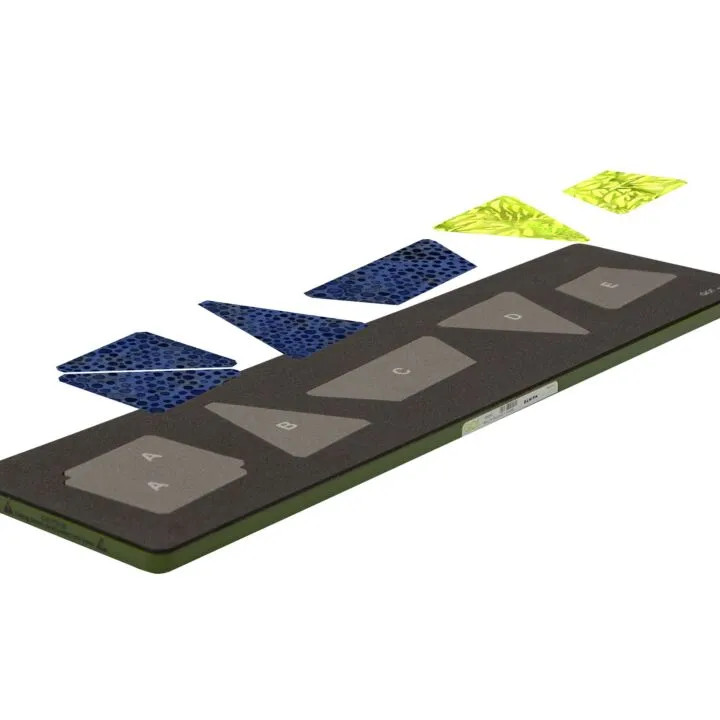
Round and round this classic block goes, with just a touch of modern illusion. Although it may look complex, this block is easy for any quilter to create with the die doing all the hard work of cutting for you. Designed to cut an entire two-colour block in a single pass through any GO! Cutter, this is a die you’ll want in your collection.
Required Cutting Mat:
GO! Cutting Mat, 6 in x 24 in (15.2 cm x 61 cm)
For the best cutting results, place the fabric so the lengthwise grain (straight of grain) feeds under the roller.
Tip: This die is specially designed to cut one complete 2-colour, 10″ finished block in a single pass through the cutter.
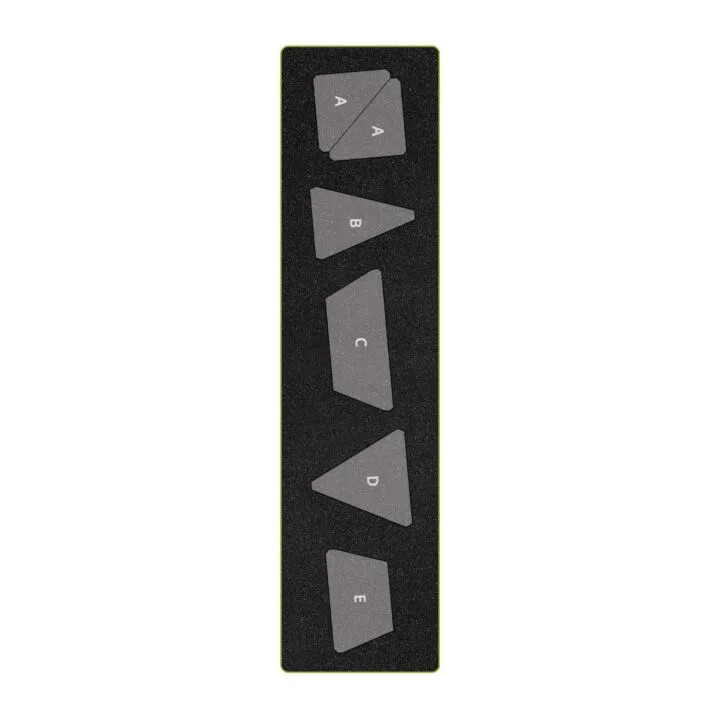
Cut one 3 7/8″ strip across the width of fabric. Fan fold into 3 7/8″ widths. Place over Shape A and cut four pieces.
Cut a 3 3/8″ strip across the width of fabric. Fan fold into 4 1/2″ widths. Place over Shape B and cut four pieces.
Cut a 6″ strip across the width of fabric. Fan fold into 2 3/4″ widths. Place over Shape C and cut four pieces.
Cut one 4 3/8″ strip across the width of fabric. Fan fold into 4 1/4″ widths. Place over Shape D and cut four pieces.
Cut a 4 1/2″ strip across the width of fabric. Fan fold into 2 7/8″ widths. Place over Shape E and cut four pieces.
The Merry Go Round quilt block is a bright and lively addition to any quilt project. Its playful circular design and colourful layout add a joyful, whimsical touch to your creations.
This is a Block on Board® (BOB®) die, meaning it’s designed to cut a complete 2-colour, 10″ block in a single pass through the cutter.
Includes six shapes that are normally difficult and time-consuming to cut by hand.
Features specialised dog-ears and ¼” seam allowances for easier alignment and piecing.
Screen-printed letters on the die help with piecing accuracy and organisation.
Free pattern downloads and step-by-step block assembly instructions are available to help you get started.
Fat Quarter-friendly.
Do you use EQ? If you have Electric Quilt® software, you can design your own Merry Go Round layouts using their block library and cut your fabric accordingly.
Cut far more fabric in less time.
Achieve accurate cuts every time — no slipping rulers or cutting errors.
Easy to use — simply place the die on the cutter, then the fabric and cutting mat on top.
Save fabric with Two-Tone Foam — place fabric only over the shapes you want to cut.
Safe to use — blades never come close to your fingers.
With some fabrics, a thread or two may remain where the die blades meet. Snip these with scissors.
Some dies have blades positioned at an angle — align the fabric with the shape edge, not the edge of the die board.
Use good-quality fabric to reduce stretch.
Always test-cut one piece before cutting multiples to ensure your fabric orientation is correct.