
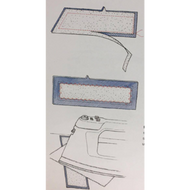
Sew-in interfacing looks more natural than fusible (iron-on) interfacing, and it's the only choice if your fabric can't withstand high heat. Fusible interfacing has a resin on one side, which bonds to the wrong side of the fabric with the application of heat, moisture and pressure. Always follow the manufacturer's directions. Fusibles do change the hand of the fabric, so test any fusible on a scrap of the fabric you're using for your project.
Sew-in, lightweight interfacing:hand- or machine-baste the interfacing to the wrong side of the fabric, next to your seam line, inside the seam allowance. Trim away the interfacing close to the line of stitching.
sew-in, medium- to heavy-weight interfacing:Trim the interfacing to fit inside the seam line to minimize bulk in the seam. Hand baste it to the wrong side of the fabric.
Fusible interfacing: Place the interfacing, adhesive side down, on the wrong side of the fabric. Cover with with a damp press cloth. Use an iron on a warm setting and press (don't iron) one section for about 15 seconds. Lift and repeat until the whole piece of interfacing is fused in place.